
Tikitiki D9: Walking the Line Between Protection and Production
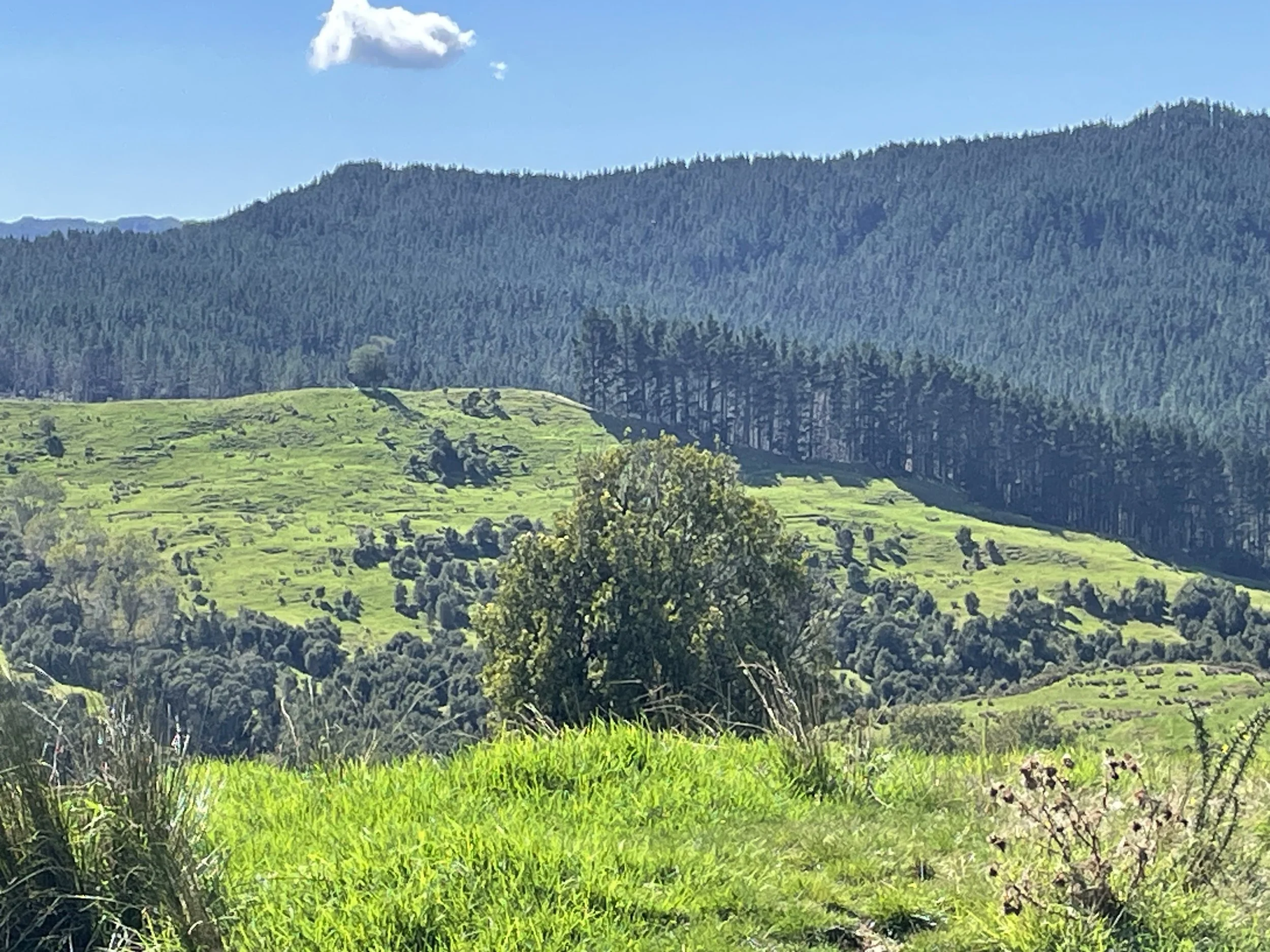
When people talk about land use transition, it can sound abstract. Big ideas, big shifts, and often, big uncertainty.
But on the ground, it looks much more practical. At Tikitiki D9, landowners are doing what many across Tairāwhiti are navigating right now, finding a balance between protecting the whenua and keeping it productive.
It is not a simple equation.
Parts of the block remain in livestock, continuing a long-standing farming practice that supports income and whānau livelihoods. Other areas have been replanted in pine following harvest or are unharvested pine, contributing to erosion control and long-term returns through forestry. At the same time, indigenous areas are being protected, recognising their ecological and cultural value.
And across vulnerable terrain, poles are being planted to stabilise slopes and prevent further degradation.
This is land use optimisation in action.
Not a full shift away from farming. Not a single solution. But a deliberate mix of land uses, each serving a purpose, each contributing to the overall health and resilience of the block.
For landowners, the drivers are clear.
Erosion is not theoretical. It is visible, measurable, and costly. Once productive areas can quickly become marginal if left unmanaged. At the same time, maintaining income is critical. For many whānau, there are limited alternatives, and the land remains the primary source of economic stability.
Recent assessments across the East Coast have highlighted just how fragile that balance can be. Severe weather has already disrupted farming systems, damaged infrastructure, and reduced productive capacity across tens of thousands of hectares. Without intervention, some of that land risks becoming uneconomic, compounding existing challenges for rural communities .
In that context, the approach at Tikitiki D9 reflects a wider shift.
Rather than seeing land use as a single choice, farming or forestry, production or protection, landowners are increasingly looking at how different uses can sit alongside each other.
Lower-producing or highly erosion-prone areas can be transitioned into forestry or native regeneration. More productive land can be retained and invested in, improving returns and efficiency. Environmental interventions like pole planting support both, protecting the land that remains in use while reducing long-term risk.
It is a layered approach.
And importantly, it is locally led.
Decisions are being made by those who know the land best. Who understand its history, its limits, and its potential. Who are balancing not just financial outcomes, but cultural responsibility, environmental impact, and whānau wellbeing.
There is no one-size-fits-all model.
But what is emerging is a pattern of thoughtful, deliberate change.
Not abandoning farming, but adapting it.
Not replacing one system with another, but integrating multiple.
Not reacting to crisis, but planning for resilience.
Tikitiki D9 is one example. There are many others across the region.
And together, they are showing that land use transition is not something that might happen in the future.
It is already underway.