
Holding the Line: Applied Erosion Control and the Reality of Climate Adaptation in Ruatorea
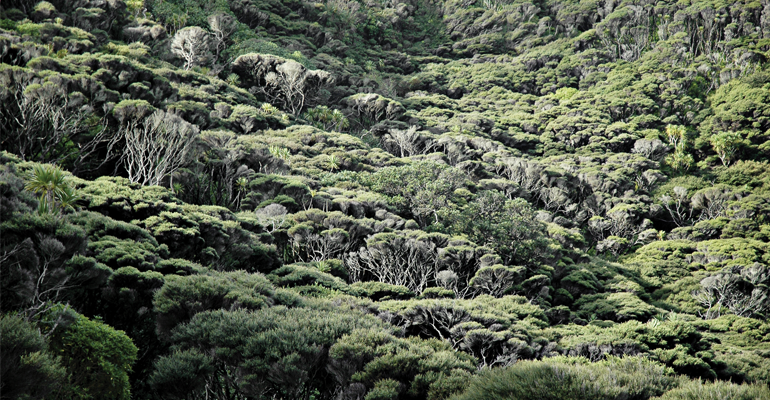
Photo Credit: Deep South Challenge
Outrage to Optimism – The Ministerial enquiry contained 49 recommendations and highlighted the extreme risk from gully erosion posed in Tairawhiti. A team of dedicated kaimahi are enabling 2 hapu collectives to address this risk in the Waiapu Valley.
In Ruatōrea, a quiet but critical form of climate adaptation is underway.
Across steep, erosion-prone hill country, crews are constructing debris dams and establishing pole planting systems designed to intercept sediment flows, stabilise gullies, and reduce downstream impact. While technically simple, these interventions sit within a much broader framework of land resilience, one that is becoming increasingly urgent across Tairāwhiti.
The science is clear. Highly erodible hill country, when exposed to intensified rainfall events, becomes disproportionately vulnerable to mass movement. Recent weather patterns have reinforced this, with severe rainfall events triggering widespread slips, siltation, and infrastructure failure across the East Coast. The consequence is not only environmental degradation, but a direct reduction in productive capacity and long-term land value .
What is being implemented in Ruatōrea reflects a shift from reactive recovery to proactive risk mitigation in a project that hapu initiated in 2019, before the events that accelerated the regional focus on land use transition.
Debris dams function to slow hydrological velocity and capture sediment before it accumulates downstream. Pole planting, particularly with species suited to deep root penetration, enhances soil cohesion and slope stability over time. Together, these methods represent a form of low-cost, high-impact intervention that aligns both environmental and economic outcomes.
However, the significance of this work extends beyond its technical application.
Project Manager, Mary-Jeane Waerehu said “…having kaimahi working on whānau lands means they go beyond what they are paid to do leading to better outcomes for everyone”
For whenua Māori, land is not a passive asset. It is an intergenerational taonga, embedded within whakapapa and sustained through active kaitiakitanga. The decision to invest in erosion control is therefore not simply operational, it is relational. It reflects a commitment to ensuring that whenua remains viable, productive, and intact for future generations.
Importantly, this work is being led locally.
Kaimahi, landowners, and whānau are not waiting for large-scale directives. They are applying practical knowledge, supported by evidence and lived experience, to stabilise their own environments. This decentralised and hapu led response model is increasingly recognised in resilience literature as a critical factor in effective climate adaptation. Solutions that are locally led, context-specific, and iterative tend to deliver more durable outcomes than top-down interventions.
Within the broader discourse of land use transition, examples such as Ruatōrea are often overlooked.
Yet they represent a foundational layer of transition itself. Before land can be optimised, diversified, or restructured, it must first be stabilised. Without this, any future land use, whether pastoral, forestry, or regenerative, remains compromised.
At Tairāwhiti Whenua, this is the work we stand alongside.
We recognise that resilience is not built through theory alone. It is built through action, through investment in the land, and through supporting whānau to implement practical, evidence-informed solutions.
The call is clear.
If we are serious about land use transition in Tairāwhiti, we must first invest in holding the land in place.
Because without that foundation, there is no transition. Only loss.