
If I Were The Minister of Agriculture
New Zealand's agricultural future should be measured not by how much more we produce, but by the value we create, the health of our whenua and the prosperity we leave for future generations.
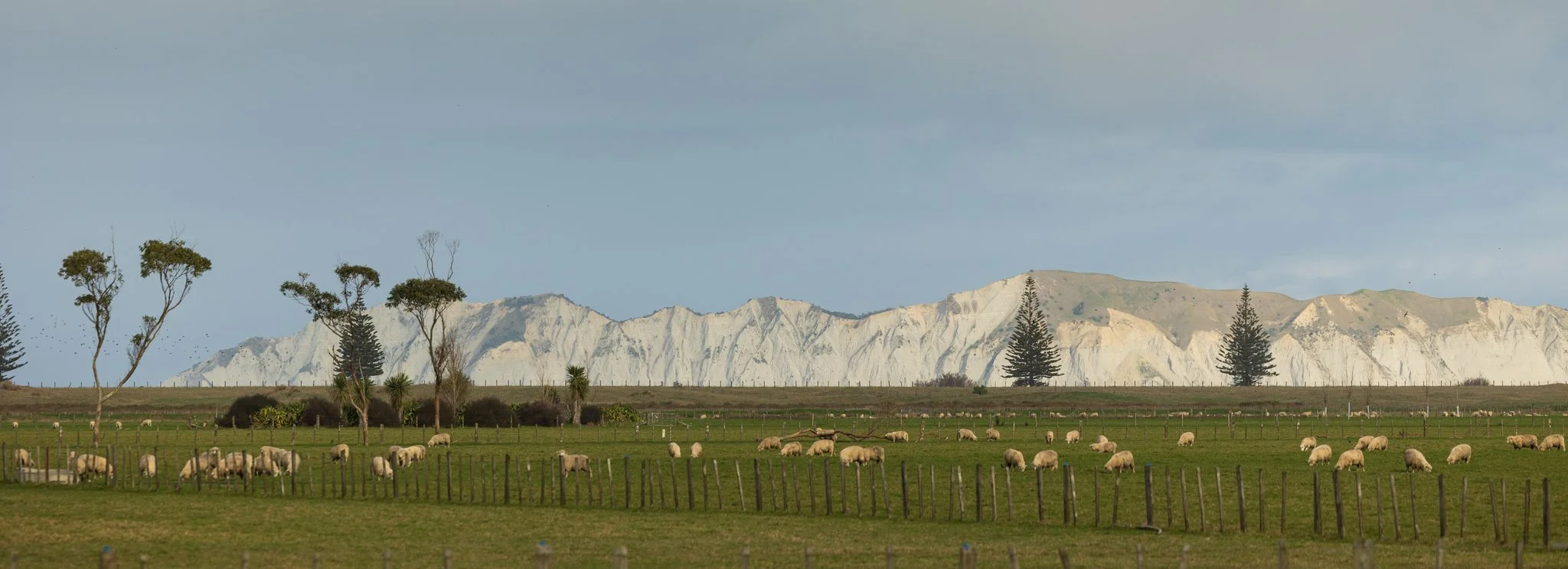
Across Tairāwhiti, some of the most important conversations taking place among farmers and Māori landowners are no longer simply about how to produce more from the land, but whether the way we have traditionally used that land will continue to deliver the economic and environmental returns we need.
These are practical conversations, shaped by the realities of farming in a region where productive potential sits alongside vulnerable landscapes, increasing climatic pressures, infrastructure constraints and the responsibility to sustain whenua for future generations.
From Māori trusts exploring alternative land uses on marginal country, to farming enterprises investing in indigenous planting, biodiversity restoration and more resilient production systems, there is a growing recognition that the future of agriculture requires a broader understanding of what makes land valuable.
These conversations are not unique to Tairāwhiti. They reflect a much larger question facing New Zealand's primary sector.
How do we create greater prosperity from our agricultural resources without placing greater pressure on the very landscapes that sustain them?
If I were the Minister of Agriculture, that question would sit at the centre of my ambition to make New Zealand the world's most valuable and environmentally responsible food and fibre producer.
For generations, our agricultural success has been built on producing high-quality food and fibre for international markets. Our farmers have earned a reputation for innovation, efficiency and resilience, often overcoming the disadvantages of distance and scale through ingenuity and a willingness to adapt.
But the conditions under which we compete have changed. We cannot realistically match the production volumes of much larger agricultural economies, nor should we aspire to do so at the expense of our natural resources or the profitability of our farming businesses.
Our competitive advantage must increasingly come from quality, provenance, environmental performance and innovation, supported by markets that recognise and reward those attributes.
Measuring what really matters
For too long, agricultural performance has been understood primarily through production volumes, livestock numbers and export tonnage. These measures remain relevant, but they tell us relatively little about the profitability of farming businesses, the condition of our natural resources or how much economic value is retained within the communities responsible for production.
I would place greater emphasis on export value per hectare, farm profitability, water-use efficiency, emissions intensity and the long-term productive capacity of our landscapes.
In Tairāwhiti, the importance of this distinction is particularly evident.
Much of our hill country remains well suited to pastoral farming, but there are also areas where erosion risk, environmental vulnerability and the economics of production demand a different approach. The opportunity is not necessarily to replace farming, but to understand where alternative or complementary land uses could deliver stronger returns while improving the resilience of the wider farming enterprise.
Work being explored through Tairāwhiti Whenua, including opportunities to integrate tree planting on marginal land through partnerships between farmers, investors and the forestry sector, reflects the kind of practical thinking we should be encouraging nationally.
The same principle applies to horticulture, specialised crops, indigenous forestry, premium livestock systems and emerging products derived from our native biodiversity.
We should be supporting landowners to understand which combinations of land use can create the greatest enduring value, rather than assuming that increasing conventional production is always the most desirable outcome.
Making environmental stewardship economically worthwhile
A more sophisticated agricultural economy must also recognise that productive and natural capital are complementary assets.
Across Tairāwhiti, the experience of severe weather events has reinforced the economic consequences of vulnerable landscapes. Erosion, sedimentation, damaged infrastructure and disrupted production affect not only individual farming businesses, but entire communities and regional supply chains.
Investing in healthier soils, indigenous vegetation, wetlands, waterways and biodiversity is therefore not simply an environmental obligation. It is an investment in the long-term productive and economic resilience of our region.
Yet too often, the financial responsibility for delivering these wider public benefits rests disproportionately with landowners.
I would work towards a system in which farmers and Māori landowners have credible opportunities to earn revenue from the environmental value they create, including carbon storage, biodiversity protection, ecosystem restoration and improved water quality.
This requires reliable measurement, appropriate market mechanisms and long-term policy certainty, but the principle is important. Where environmental stewardship creates measurable value for the wider economy and society, landowners should have opportunities to share in that value.
For whenua Māori, this approach is especially significant.
Many Māori trusts and incorporations are managing land with multiple responsibilities, balancing commercial performance with cultural aspirations, environmental restoration and the obligation to protect an intergenerational asset.
However, limited access to capital, infrastructure constraints and complex ownership arrangements can restrict the ability to pursue new opportunities.
A national agricultural strategy that genuinely values whenua Māori would address these barriers and support landowners to develop diversified, commercially viable land-use systems on their own terms.
Creating more value beyond the farm gate
Our approach to international markets also needs to evolve.
New Zealand has worked hard to secure market access, but access alone does not guarantee strong returns, particularly when our products compete primarily on price against producers operating at much greater scale.
I would place greater emphasis on developing markets prepared to pay for the qualities that distinguish New Zealand food and fibre, including food safety, provenance, traceability, environmental performance and product innovation.
Premium meat, specialised dairy ingredients, wool innovations, mānuka products, nutraceuticals and indigenous botanicals all present opportunities to create greater value without continually increasing production volumes.
But we must also consider where that value is captured.
For regions such as Tairāwhiti, where primary production underpins much of the local economy, greater investment in regional processing, advanced manufacturing, logistics and product development could strengthen local employment and enterprise while allowing producers to retain more of the value generated from their resources.
The ambition should not simply be to export more. It should be to ensure that every tonne exported, every hectare farmed and every investment made delivers stronger returns to the people and regions that make production possible.
Trusting farmers and backing innovation
None of this will be achieved through regulation alone.
For generations, New Zealand farmers have demonstrated an extraordinary ability to adapt to changing markets, technologies and environmental conditions. That ingenuity is one of our greatest national strengths and should be encouraged rather than constrained by increasingly prescriptive approaches to land management.
Government has an important role in establishing clear expectations, environmental safeguards and long-term policy certainty, but it should also trust farmers and landowners to develop practical solutions appropriate to their land and circumstances.
Alongside this, we need sustained investment in agricultural science and innovation, particularly methane reduction, precision agriculture, genetics, automation, water-use efficiency, biological inputs and climate resilience.
The challenge is ensuring that these advances become accessible and commercially practical for farming businesses of different sizes, locations and ownership structures.
In Tairāwhiti, where geography, infrastructure and capital availability can create additional barriers to innovation, stronger partnerships between landowners, researchers, industry and investors will be essential.
What we learn from these regional approaches can inform solutions across New Zealand, particularly in other areas facing similar challenges of vulnerable landscapes, constrained investment and changing land-use economics.
A different ambition for New Zealand agriculture
The future of our primary sector should not be framed as a choice between agricultural productivity and environmental responsibility.
We need both, and our long-term prosperity will increasingly depend on how effectively we bring them together.
For Māori landowners, this is not a new concept. The responsibility to sustain whenua for future generations has always required decisions that extend beyond immediate financial returns, recognising the enduring relationship between the health of the land and the wellbeing of the people connected to it.
There is considerable value in bringing that intergenerational perspective into the way New Zealand thinks about agricultural development.
If I were the Minister of Agriculture, I would want our country to be recognised not simply for the quality of the food and fibre we produce, but for demonstrating that a prosperous agricultural economy can also restore natural systems, reward environmental stewardship and create lasting wealth for rural communities.
That ambition begins with the decisions being made on farms and whenua across regions like Tairāwhiti, but its relevance extends to every part of New Zealand's primary sector.
Our greatest opportunity is not to extract more from every hectare, but to create more value from it, while ensuring the land remains capable of sustaining the generations who follow.