
A Tribute to Dr. Ian Ruru
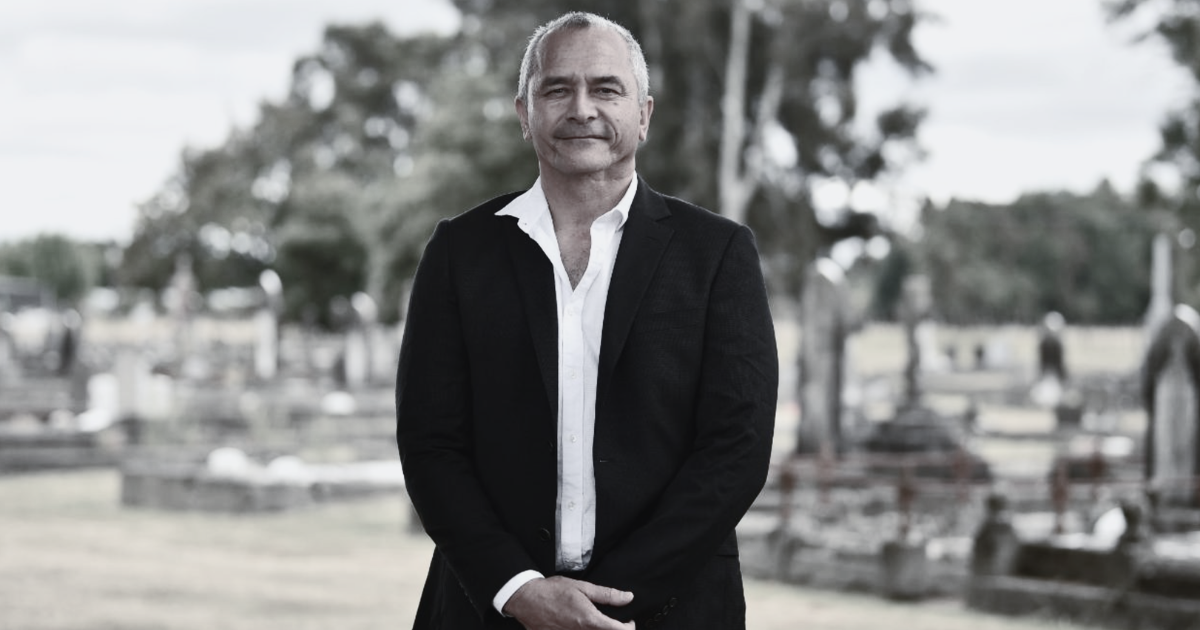
Over the past week, we have taken some time to reflect on the passing of Dr Ian Ruru.
Some people leave behind publications, research papers or professional achievements. Others leave behind that and something much more enduring… a way of seeing the world that continues to shape the decisions of those who follow.
Ian was one of those people.
Long before concepts like regenerative land management, systems thinking and environmental indicators became part of everyday conversation, Ian was asking a different question altogether: What is the mauri telling us?
For him, the health of our whenua could never be measured by production alone, nor could the wellbeing of our wai be captured by data in isolation. The true measure of success lay in whether the life force of a place had been strengthened, whether communities remained connected to it, and whether future generations would inherit something richer than what came before. It was a way of thinking that quietly challenged many of us to look beyond what could be counted, and instead consider what truly mattered.
It was this philosophy that underpinned much of Ian's life's work.
Across Aotearoa, Ian became widely respected as a scientist, researcher, educator and leader who dedicated his career to weaving together mātauranga Māori and western science in ways that few others could. He had a remarkable ability to express mātauranga Māori through the language of western science, while ensuring neither knowledge system lost its integrity. In doing so, he helped bridge a cultural knowledge gap that had existed for generations, giving iwi, communities, researchers and decision-makers the confidence to work together from a place of shared understanding rather than difference. Rather than asking one knowledge system to prove itself against the other, Ian demonstrated that both were stronger when held together with humility, integrity and respect.
His leadership in the development of the Mauri Compass has become one of the most enduring examples of that thinking. More than an assessment framework, it became a bridge — connecting mātauranga Māori with scientific evidence in a way that was practical, credible and deeply respectful of both. It provided iwi, hapū and communities with a way to understand the health of their whenua through both evidence and whakapapa, reminding us that environmental restoration is never simply about repairing ecosystems — it is about restoring relationships. Relationships between people and place, between knowledge systems, and between today's decisions and the generations who will one day inherit them. That whakaaro resonates deeply with us at Tairāwhiti Whenua.
Every day we have the privilege of working alongside Māori landowners who carry the responsibility of balancing economic opportunity with their obligations as kaitiaki. Those are rarely simple decisions. Ian's work gave many of us a language and a framework that affirmed what our tīpuna have always known - that when the mauri of the whenua is strong, our people are stronger too.
His influence can be found far beyond the organisations he worked with or the research he published. It lives in restored wetlands, healthier waterways, better conversations around governance tables, and in the growing confidence of communities who now see mātauranga Māori not as something to preserve from the past, but as something that actively shapes the future.
Those fortunate enough to know Ian often speak first of his generosity. Despite the depth of his knowledge, he was never interested in being the loudest voice in the room. He listened carefully, shared his whakaaro freely, and encouraged others to keep asking better questions. His leadership was defined not by status, but by the people he inspired, the confidence he gave others, and the kaupapa he leaves in capable hands.
The passing of leaders like Ian reminds us that while a life may come to an end, its impact does not. It continues in the conversations we have, the decisions we make, and the responsibility we carry to leave our whenua in better condition than we found it.
As we continue supporting the aspirations of Māori landowners across Te Tairāwhiti, we do so knowing our work has been shaped by people like Ian — people who quietly changed the way an entire sector thinks about whenua, kaitiakitanga and the generations still to come.
On behalf of Tairāwhiti Whenua, we extend our deepest aroha to Ian's whānau, friends, colleagues, students and the many communities whose lives have been enriched by his wisdom.
Moe mai rā e te rangatira.
Your legacy is not only found in your enduring mahi, but in the way countless people now see, value and care for the mauri of our whenua. That is a legacy that will continue to guide us for generations to come.